
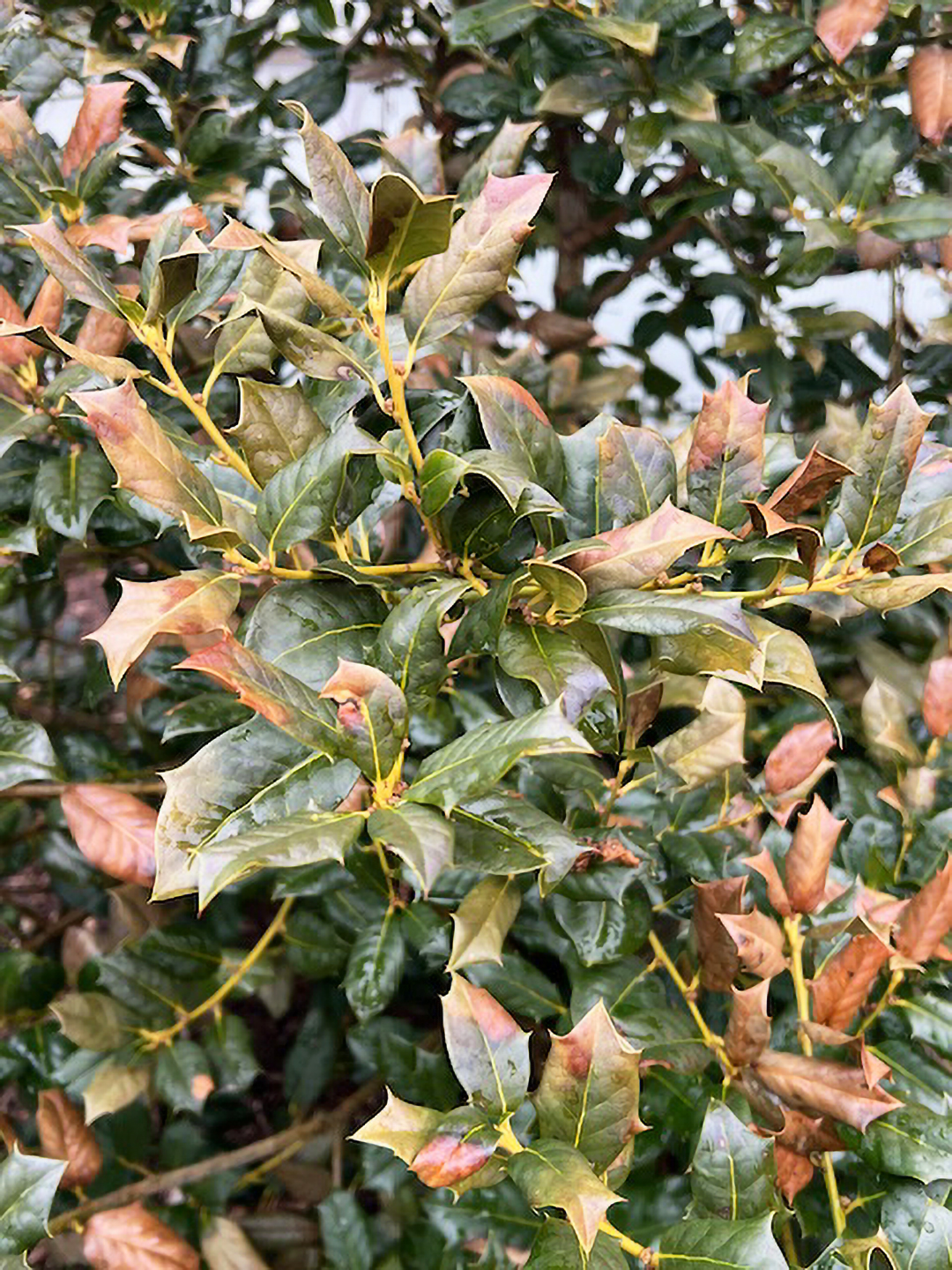
After a long winter, it’s common to notice brown patches, dried leaves, or discolored foliage on some landscape plants. While it can be alarming at first glance, what you’re seeing is often winter damage, a common and usually temporary issue affecting many evergreen plants.
Broadleaf evergreens such as hollies, magnolias, and laurels are particularly susceptible. Unlike deciduous plants that drop their leaves in winter, these plants keep their foliage year-round. That foliage continues to lose moisture even during the coldest months.
Why Winter Damage Happens
Winter damage typically occurs when plants lose moisture faster than they can replace it. During cold spells, the ground may freeze solid, preventing plant roots from absorbing water. At the same time, evergreen leaves continue to release moisture into the dry winter air.
Without the ability to replace that lost water, leaf tissues begin to dry out. The result is brown, crispy areas on the leaves where the plant tissue has died. This condition is often called winter burn.
Needled evergreens such as arborvitae, spruce, and pine can also experience winter stress, although it often appears differently. Instead of patchy browning, their needles may turn bronze or brown during the coldest months. In many cases, this discoloration improves once temperatures warm in spring.
Why Fall Watering Matters
One of the best ways to help prevent winter damage is proper watering in late fall. Evergreens benefit from entering winter well-hydrated. Providing ample water through autumn allows plants to store moisture in their tissues before the ground freezes, helping them withstand the drying effects of winter winds and sun.
If rainfall is limited in fall, occasional deep watering can make a significant difference in how well evergreen plants tolerate winter conditions.
Other Types of Winter Damage
Cold weather can affect plants in several other ways as well:
- Frost cracks – These vertical cracks sometimes appear on tree trunks during winter when rapid temperature fluctuations cause bark and wood to expand and contract.
- Salt damage – Plants growing near roads, driveways, and sidewalks may suffer from exposure to de-icing salts. Salt can burn plant tissue and interfere with the plant’s ability to absorb water, often causing browning along leaf edges or on the side of the plant facing the road.
What Should You Do Now?
The good news is that most winter damage is cosmetic rather than fatal. As temperatures warm and plants resume active growth, new foliage often replaces damaged leaves.
For now, it’s best to wait until spring before pruning. Once new growth begins, any dead or damaged branches can be trimmed away, allowing the plant to recover and fill in naturally.
Winter damage is simply one of the challenges plants face in our climate. With good fall care and a little patience in spring, most evergreens will bounce back and continue to thrive in the landscape.