
Pantone’s Color of the Year for 2026 is Cloud Dancer, which is a soft, luminous white. It is the first time Pantone has selected a true white as its annual color. In announcing the choice, Pantone describes Cloud Dancer as “a lofty white neutral whose aerated presence acts as a whisper of calm and peace in a noisy world.”
Gardeners have long understood this instinctively.
White in the garden serves the same purpose as white space in graphic design and other art forms. It offers a pause. It soothes the eye. It creates balance. Rather than feeling empty, white is intentional. It is a place where the eye can rest before moving on.
The Power of a Visual Pause
A garden filled entirely with color can feel energetic and joyful, but without contrast, it can also feel overwhelming. White provides relief. It calms busy planting schemes and helps organize visual information, much like margins do on a page.
When white is present, everything around it becomes clearer.
White Makes Other Colors Appear Brighter
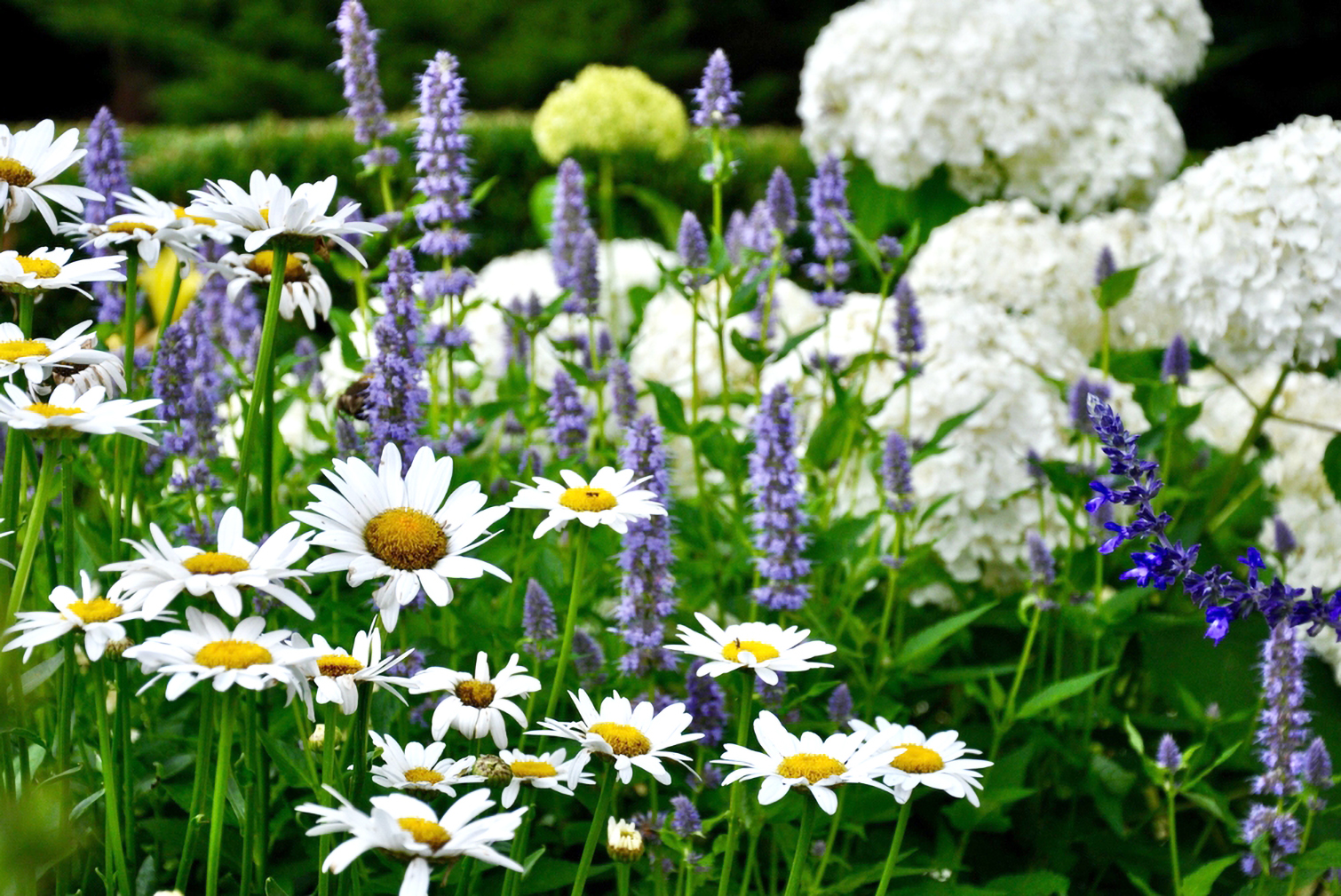
White flowers have a remarkable ability to make other colors appear brighter and more saturated. Deep purples feel richer, blues more vivid, and warm tones more luminous when paired with white. It sharpens contrast without demanding attention. It’s a supporting player that quietly elevates the whole composition.
This is one reason white works beautifully in every season, from spring through fall.
A Garden That Glows at Night
As daylight fades, darker colors recede, but white comes alive. White blooms reflect moonlight, porch lights, and evening skies, extending the enjoyment of the garden well into dusk. For centuries, gardeners have relied on white flowers to bring visibility, calm, and beauty to evening landscapes.
White doesn’t disappear when the sun goes down. It glows.
When You’re Unsure, White Always Works
Perhaps white’s greatest strength is its reliability. When you don’t feel like making choices, when you want something that simply works, white is the answer.
It pairs with every color.
It suits every style.
It never feels dated or out of place.
White is timeless.
White in Bloom
White-flowering plants bring light, balance, and versatility to the garden across seasons and styles. From flowering trees to shrubs, perennials, and annuals, white acts as a unifying thread, brightening shady spaces, extending evening interest, and pairing effortlessly with any color palette. The chart below highlights a selection of plants that showcase the enduring role of white in the landscape.
White-Flowering Plant Highlights
Trees
- Serviceberry (Amelanchier)
- Dogwood (Cornus florida)
- Kousa Dogwood (Cornus kousa)
- Japanese Snowbell (Styrax japonicus)
- Fringe Tree (Chionanthus virginicus)
- Crape Myrtle (Lagerstroemia indica)
Shrubs
- Hydrangea (panicle & smooth types)
- Summersweet (Clethra alnifolia)
- Buttonbush (Cephalanthus occidentalis)
- Viburnum (selected varieties)
- Camellia (spring & fall blooming)
Perennials
- Coneflower ‘White Swan,’ ‘Kismet White,’ ‘PowWow White’
- Calamintha ‘White Cloud’
- Astilbe ‘Bridal Veil,’ ‘Deutschland,’ ‘Snowdrift,’ ‘Vision in White’
- Turtle Head (Chelone glabra)
- Shasta Daisy
- Hellebore ‘Molly’s White’
- Daylily ‘Joan Senior’
- Clematis ‘Henryii’
- Anemone ‘Honorine Jobert’
- Salvia ‘Snow Hill’
Annuals
- Cosmos
- Vinca
- Alyssum
- Angelonia
- Geranium
- Petunias
- Pansy