
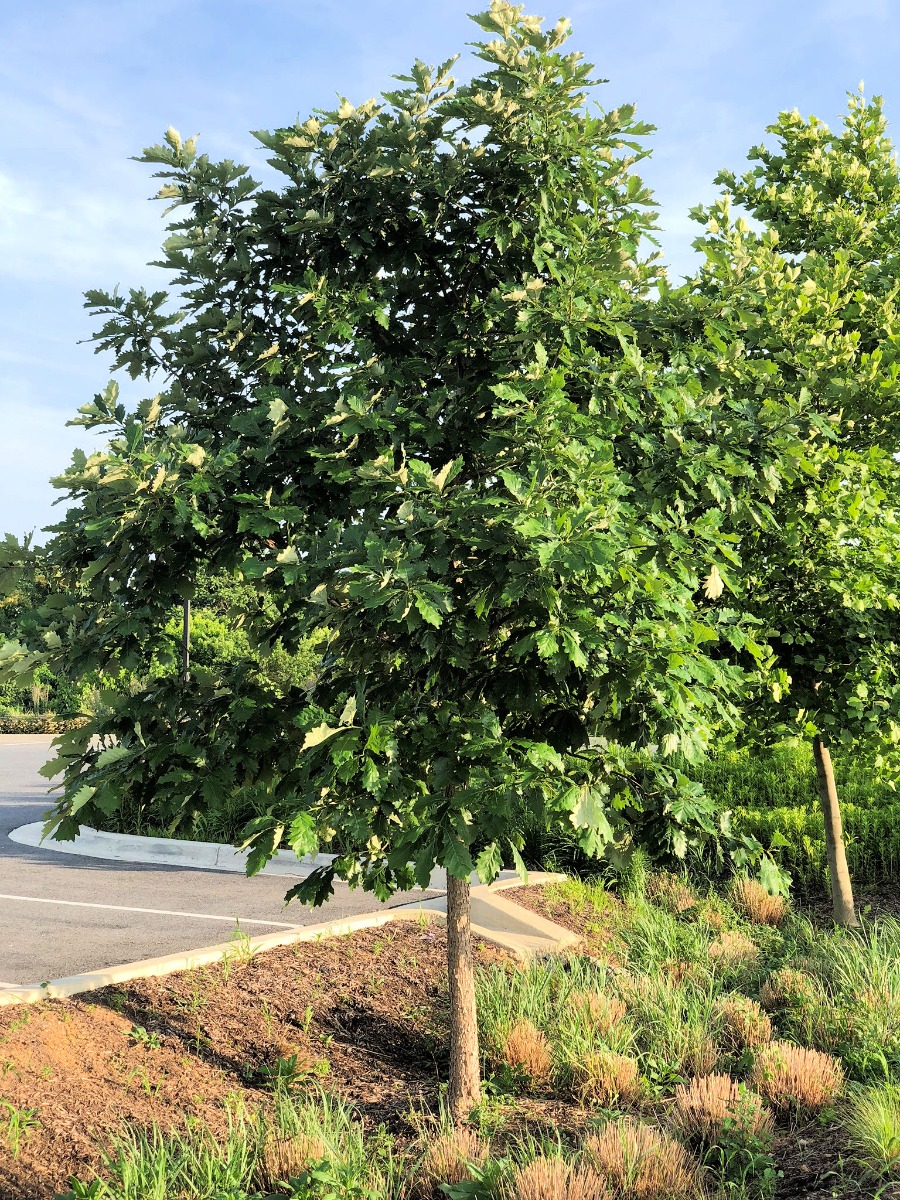
Most of us choose trees for their shade, flowers, or fall color. But scientists have discovered that some trees contribute far more to the environment than others.
Oaks are among the very best. They are considered a keystone species, meaning they play an essential role in supporting healthy ecosystems. Just as the keystone in an arch holds the entire structure together, oak trees provide food and shelter for an extraordinary variety of life, making them one of the most environmentally valuable trees you can plant.
Entomologist Doug Tallamy, one of the country’s leading voices on native plants, has found that oaks support more species of caterpillars than any other tree in our region. While most of us don’t get excited about caterpillars, they are an essential food source for baby birds and play an important role in keeping nature in balance.
Beyond insects, oaks produce acorns that feed deer, squirrels, chipmunks, wild turkeys, woodpeckers, blue jays, and many other mammals and birds. Their broad canopies provide nesting sites, shelter from the elements, and cooling shade for people and wildlife alike.
It is no surprise that the white oak was chosen as Maryland’s official state tree. Majestic, long lived, and exceptionally durable, it is one of many outstanding oak species that thrive in our region. White oaks, red oaks, swamp white oaks, willow oaks, scarlet oaks, overcup oaks, and many others each offer their own combination of size, form, and fall color while providing tremendous environmental benefits.
Oaks are also remarkably resilient. Once established, they are long lived trees that tolerate a wide range of growing conditions and can thrive for generations. Their impressive branching structure, seasonal beauty, and longevity make them outstanding landscape trees.
Planting an oak is more than adding another tree to your yard. It is an investment in the future of your landscape and the health of the environment.